Blog ·
Tirana traffic: why it's so bad and how to avoid it
Tirana traffic is bad because the number of cars grew much faster than the roads and buses that serve them. It's worst on weekday mornings and again around 17:00. To beat it, travel outside those hours, walk short trips in the centre, and leave extra time on the bus, because buses sit in the same jams as cars.
Why is Tirana traffic so bad?
In short: far more cars now share streets that were not built for them.
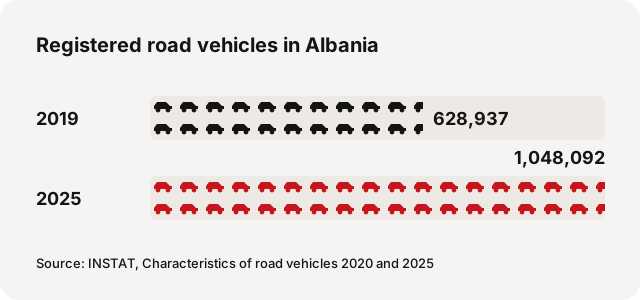
- Cars are new here. Until 1990, the whole country had only a few thousand cars. By the end of 2025, Albania had over a million registered vehicles, about two thirds more than in 2019. More than a third of them are in the Tirana area.
- The roads didn't keep up. The city got much denser, but the roads stayed mostly the same.
- The city spread out. New homes went up at the edges. Kashar, on the west side, about doubled its population between the 2011 and 2023 censuses. More people now travel into the centre each day.
- Lots of very short car trips. 80% of people live within 3 km of the centre, yet more than half of all car trips are shorter than 2 km.
- Buses get no head start. Most roads have no bus lanes or other priority, so buses wait in the same jams. Slow buses push more people into cars, and more cars slow the buses even more.
- Parked cars block the way. 68% of residents say illegally parked cars get in their way when they walk.
How slow does it get?
At rush hour, some central roads move at walking pace.
In 2019, morning traffic on some main roads around the centre averaged under 5 km/h. City buses averaged only 9 to 11 km/h in 2020. For comparison, 15 km/h is the usual minimum standard for a city bus.
When is traffic worst?
Weekday early mornings and around 17:00 are the worst times to be on the road.
School runs make the morning worse, as more and more children go to school by car.
These roads jam the most:
- the road to the airport (Rruga e Aeroportit)
- Rruga e Kavajës
- Bulevardi Bajram Curri
- Rruga Muhamet Gjollesha
- the road to Astir
How do you beat Tirana traffic?
Move your trip out of rush hour if you can. If you can't, walk or cycle where it makes sense, and leave extra time for buses and cars.
Pick your time
- Avoid the early-morning and 17:00 peaks on weekdays.
- If you have to go at rush hour, leave extra time and stay off the roads listed above where you can.
Pick your way of getting around
- Walk short trips in the centre. Most people live within 3 km of the centre, and at rush hour some central roads are no faster than walking. Skanderbeg Square has been car-free since 2017, and bollards keep cars out of the New Bazaar area.
- Cycle where there are lanes. Durrës Street has a two-way cycle path, and the main boulevard has protected bike lanes.
- Take the bus, but leave extra time. Buses are the city's only public transport and get stuck in the same traffic. Durrës Street has a bus lane. Bus routes have been on Google Maps since 2024, so you can plan your trip there.
- Driving across the city? The outer ring road opened in full at the end of 2024. Expect jams near Astir all the same.
For more on each option, see our guide to getting around Tirana.
Will it get better?
Slowly. The biggest change on the way is a network of electric rapid buses.
The city plans three electric rapid bus lines:
- east to west, from Kinostudio to Kombinat
- a loop on the inner ring road (Unaza)
- a loop through Tirana e Re and the west of the city
About 65% of the route will be separate from car traffic. Bus speeds should rise from about 9 km/h to 20 km/h, and a full loop of the inner ring should drop from 54 to 27 minutes.
Want to get around on two wheels?
Quick Ride connects you with independent motorcycle drivers in Albania. Open the app, pick a nearby driver, and pay them in cash at the end. Rides depend on which drivers are around at the time.